

Democratic Local Governance Program

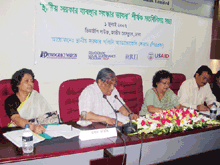
|
Strengthening
Local Governance in Bangladesh: Issues and Agenda for Reforms
and Reorganization
|
||||||||||
|
Professor
Dr. Salahuddin Aminuzzaman
Department of Public Administration University of Dhaka saminuzzaman@yahoo.com |
||||||||||
| History
of local government in Bangladesh has a long tradition and legacy.
However, the experiences over the years indicate a greater level
of "pessimism" about the role and potential of local
government system, with particular reference to rural and small
town urban local government system. An objective assessment
would reveal that none of the political regime gave due importance
to the local government system. Though two reform commission
namely Local Government Structure Review Commission 1993, Local
Government Commission 1997, and a Committee for Recommendation
of Financial Powers and Sources of Financing LG Institution
1999 were set by the political regime, but unfortunately no
substantive reform or meaningful changes took place in the role,
structure and, management of the LG in Bangladesh. Ironically
most the substantive changes and reforms of LG system took place
during the martial law regimes and or period of authoritarian
rule.
Bangladesh at present in cross road to wards her journey to democracy. Let us all move forward and collectively demand some meaningful and substantive reform to develop the LG system and strengthen the root of democracy in Bangladesh. |
||||||||||
| Major Issues of Local Government Reform in Bangladesh | ||||||||||
| Setting
the tiers right Upazila and Union Parishad provide both the proximity to citizens - government close to the people-and offer the appropriate size for scale efficiencies to be captured in the delivery of rural services. A third tier above the Upazila, at the district level, therefore needs to be reviewed critically. Too many tiers could also create functional and jurisdictional conflict. |
||||||||||
| Review
of Reserved, Transferred and Residual Functions Time has come for the government to review the range of functions being carried out by the national and local government. There should be a critical and objective assessment of the existing three categories (Reserved, Transferred and Residual) functional allocations between the national and local government. |
||||||||||
| Intergovernmental
fiscal transfer policy There should be a clear inter-governmental fiscal transfer policy for diving resources among tiers eliminating uncertainty and scope for political manipulation. |
||||||||||
| Permanent
Local Government Finance Commission. In order to ensure objective distribution and allocation of national government allocation to the LG bodies, there should be a permanent Local Government Finance Commission. The Commission will also look after auditing and financial monitoring system of the LGs. |
||||||||||
| Taming
the Political Actors The Members of Parliament (MPs) must not be involved in any manner with the affairs of the LG units because this violates the Principle of Separation of Power. |
||||||||||
| Constitutional and Regulatory reforms | ||||||||||
|
||||||||||
| Capacity
building Reorganization and building capacities of the national training institutes like NILG, BARD and RDA should be initiated to cater the demand side of the capacity. |
||||||||||
| Strengthening
Local Government Association/ Forum Efforts should be made to establish leadership forum for the local government elected representatives to serve as a platform for exchange and sharing of information regarding development and other activities impacting on the community and bilateral negotiation with the central government. The forum, in the long run, could also provide capacity building support as well. |
